What If Pagsinapol Was Painted by Famous Master Artists?
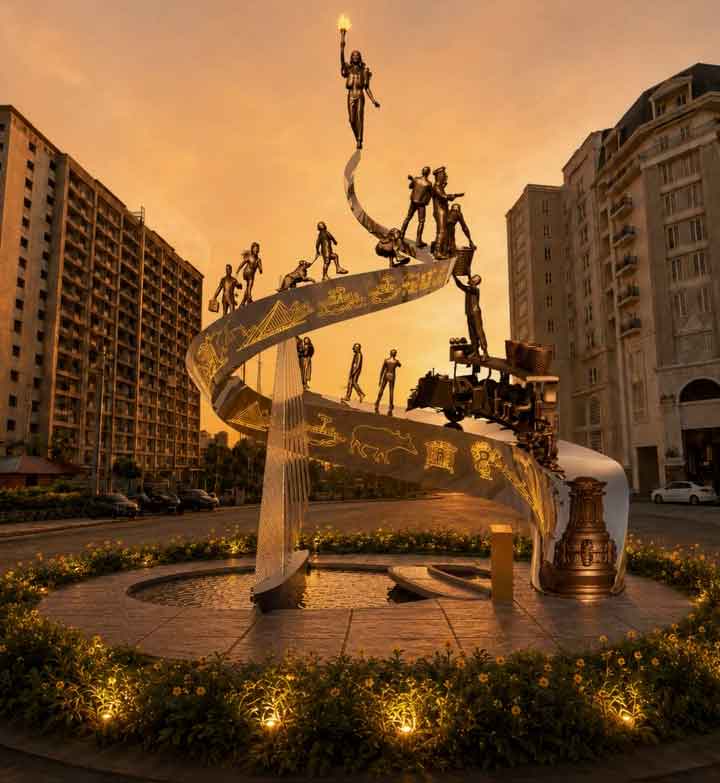
Pagsinapol is a monumental public artwork in Iloilo Business Park that celebrates the shared history, culture, industries, and aspirations of the Ilonggo people. Although its most prominent elements—the sailboat and the torch-bearing Ilongga—were unveiled to the public, the sculpture was not yet fully completed. Work has now resumed to finish the remaining details and bring the artist’s complete vision to life.
Once completed, Pagsinapol is expected to feature a grand, illuminated ribbon-like structure filled with figures and symbols representing Iloilo’s heritage and progress. The sweeping composition will surround the sailboat and rise dramatically toward the Ilongga holding the torch, creating a striking landmark that tells the continuing story of the Ilonggos.
Even though we now live in the age of generative AI—where images can be created with almost no limit beyond our imagination—nothing can truly replace art made by genuine artists and masters. The vision, emotion, skill, and human experience behind an original work remain impossible to replicate completely.
Still, that should not stop us from tickling our imagination and exploring a playful “What if?” scenario.
What if Pagsinapol had been painted by some of the world’s legendary artists and master painters, both international and Filipino? Using AI, we attempted to reimagine the sculpture through their distinct artistic styles—not to replace the original masterpiece, but to celebrate it and see how it might have looked through the eyes of history’s greatest artists.
And this is how those imagined versions of Pagsinapol might look…
If “PAGSINAPOL” was created by the masters
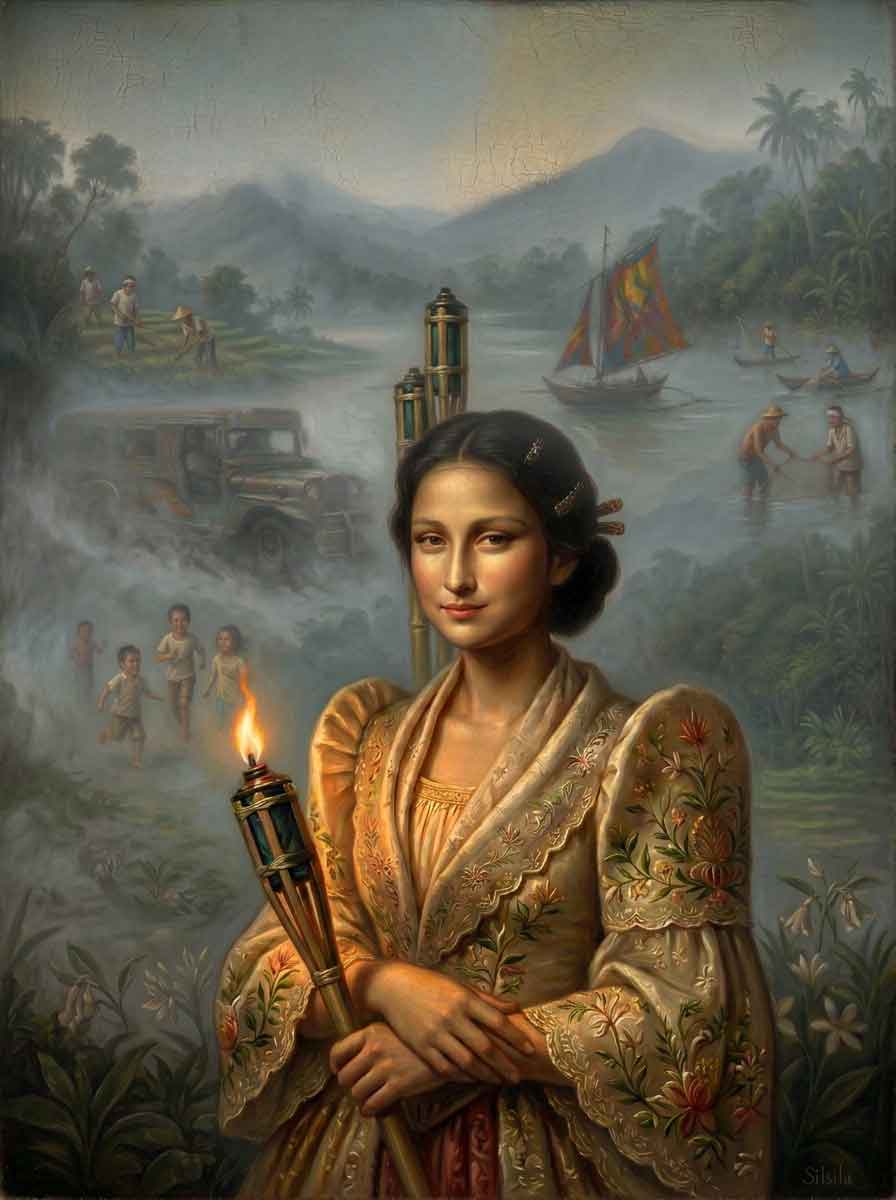
Leonardo da Vinci
The central figure directly mirrors Leonardo da Vinci’s Mona Lisa through her half-length, three-quarter posture, gentle enigmatic smile, and folded hands.
The piece utilizes Da Vinci’s signature sfumato technique, seamlessly blurring the misty background elements into soft, atmospheric distance behind the subject.
Additionally, the composition frames a detailed portrait against a sweeping, hazy landscape of mountains and water, echoing the classic Renaissance backdrop structure.
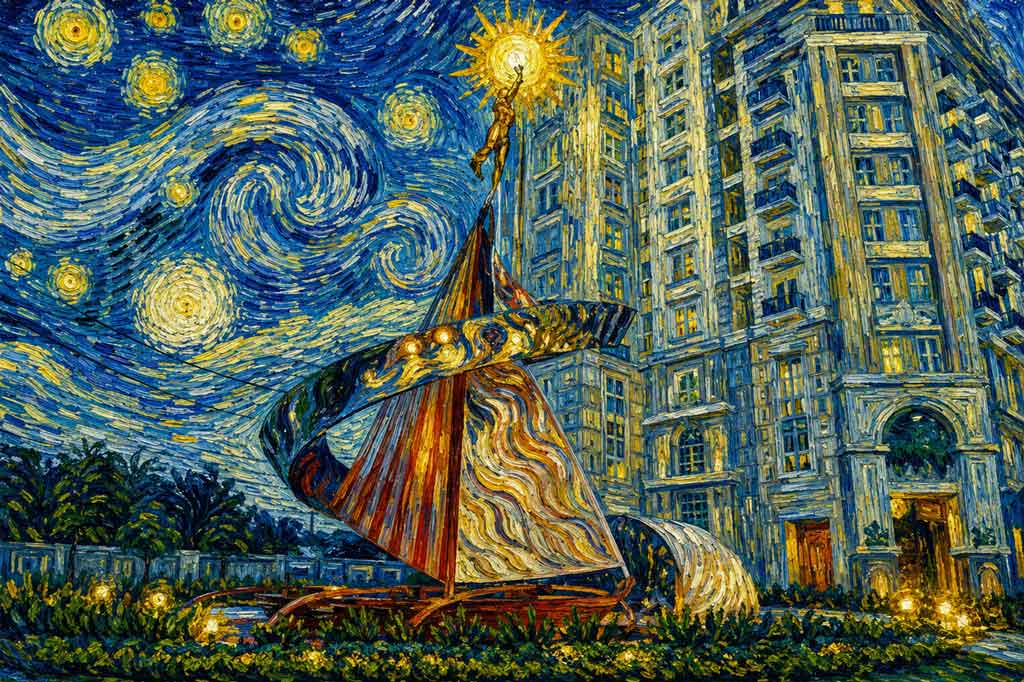
Vincent van Gogh
This resembles Vincent van Gogh’s work through its thick, energetic brushstrokes and swirling, rhythmic sky. The intense blues and glowing yellows create the dramatic color contrast associated with paintings such as The Starry Night. Even the buildings and vinta appear to move and pulse rather than remain perfectly still, giving the scene a strong emotional energy. The result feels expressive and dreamlike instead of strictly realistic.
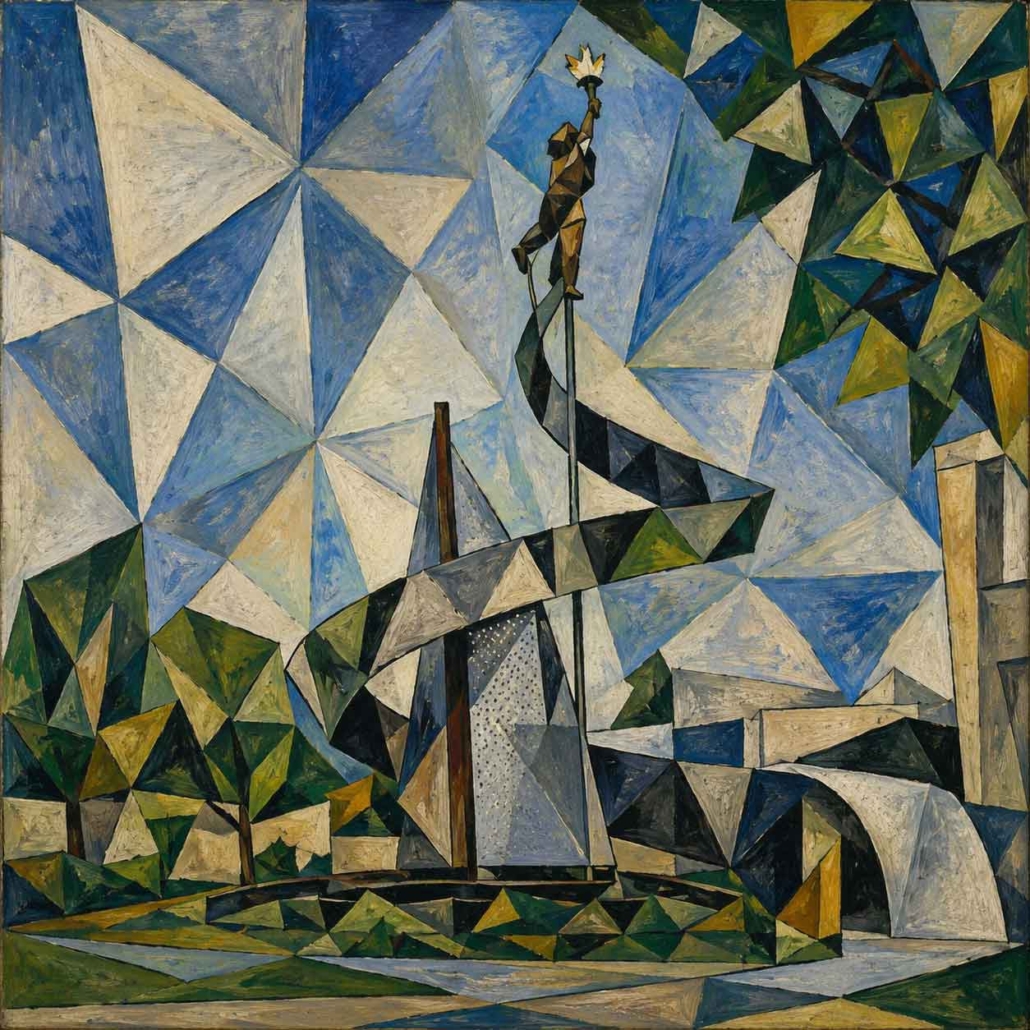
Pablo Picasso
The painting strongly reflects Pablo Picasso’s Analytical Cubism through its heavy deconstruction of form into sharp geometric planes and triangular facets.
Instead of traditional linear perspective, the scene breaks down real-world structures—like trees, buildings, and a monument—into a flattened, mosaic-like grid that shows multiple angles at once.
The composition relies on a muted, structured color palette dominated by earthy ochres, blues, and grays, which emphasizes form and spatial breakdown over realistic shading.
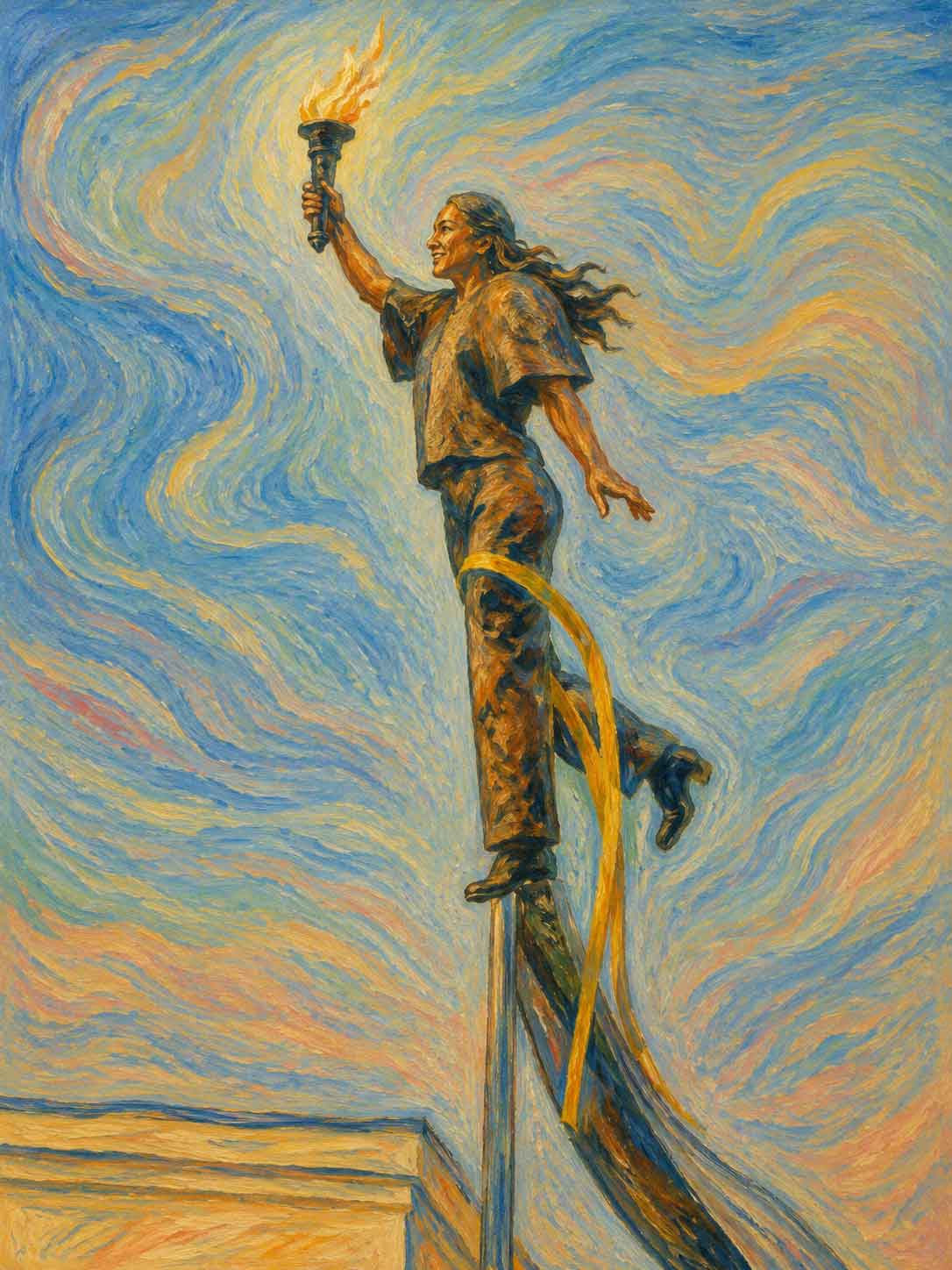
Edvard Munch
The painting strongly echoes Edvard Munch’s Symbolist style through its dramatic, swirling sky made of fluid, undulating lines reminiscent of The Scream.
The expressive, dynamic composition uses raw emotional energy and stylized motion rather than strict photorealism.
Additionally, the contrasting color palette and heightened atmosphere emphasize psychological depth and symbolic triumph in the figure’s stance.
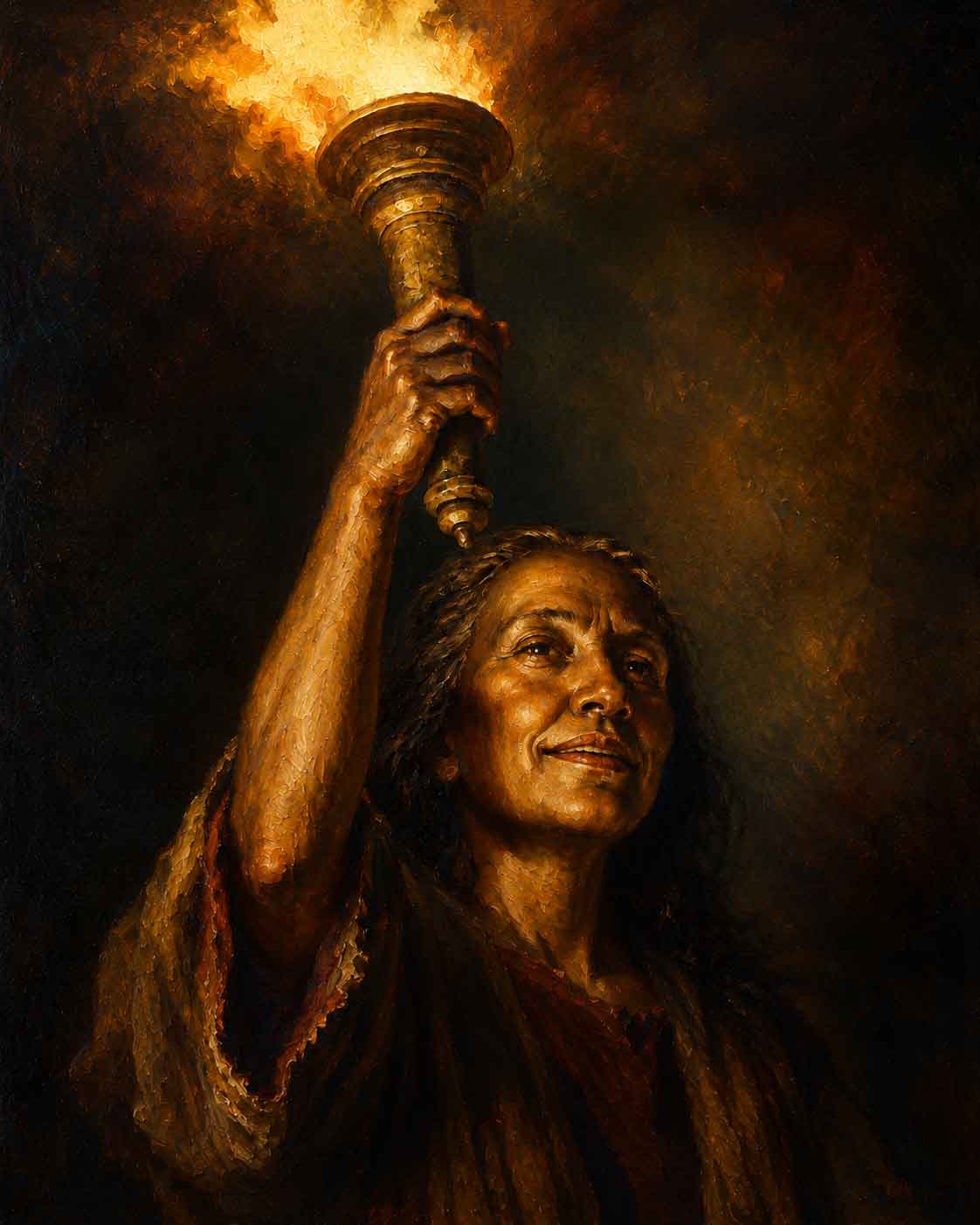
Rembrandt Harmenszoon van Rijn
This painting heavily employs Rembrandt’s signature tenebrism and dramatic chiaroscuro, casting the subject out of a deep, murky darkness using a single, intense light source from the torch.
The color palette consists of rich, warm earth tones—dominated by deep umbers, golden ochres, and glowing amber highlights—that are quintessential to Baroque Dutch painting.
Additionally, the thick, tactile impasto on the skin and drapery captures character lines, texture, and introspective emotion with realistic psychological depth.
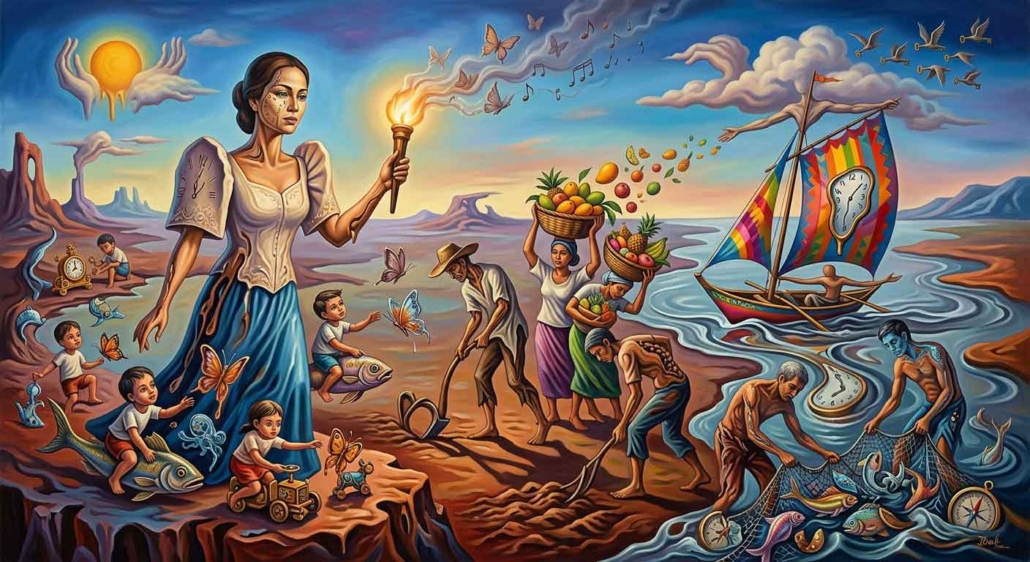
Salvador Dalí
The painting strongly mirrors Salvador Dalí’s Surrealism through iconic motifs like melting clocks draped over the sail and floating in the water, as well as a dripping, liquid sun held by cloud-like hands.
It features classic Dalíesque dream logic, blending bizarre transformations—such as butterflies emerging from smoke notes, figures riding fish, and hands forming the mast of a boat—set against a vast, desolate desert landscape.
The entire scene relies on sharp, meticulous hyper-realism applied to absurd imagery, creating the illusion of a tangible, hand-painted dreamscape.
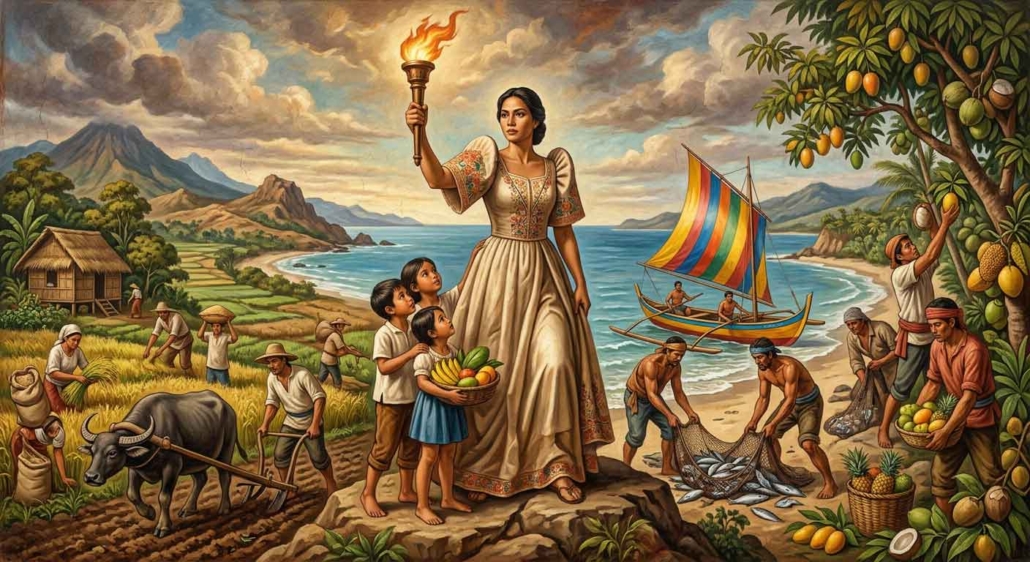
Michelangelo di Lodovico Buonarroti
This piece reflects Michelangelo’s High Renaissance style through its monumental, heroic idealization of the human form, showcasing robust musculature and powerful postures in the working figures.
The central female figure stands in a classic, commanding contrapposto pose on the rocks, elevated like a sculpted statue rather than a flat painting.
Additionally, the composition relies on crisp line definition, sculptural modeling of the drapery, and dramatic, sweeping sky drama reminiscent of the Sistine Chapel frescoes.
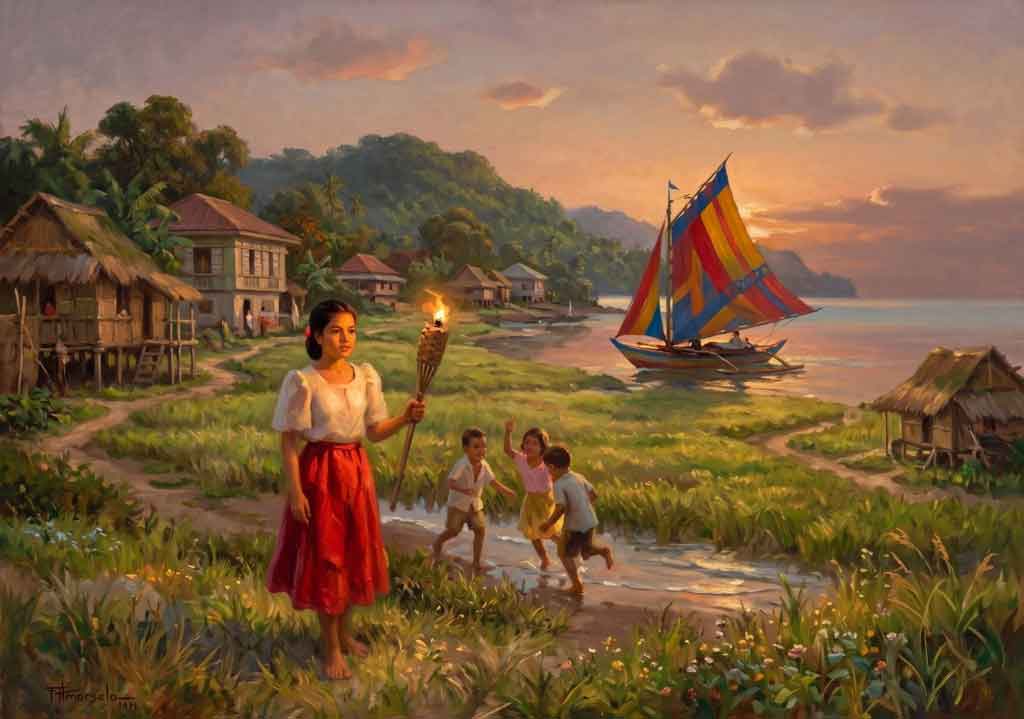
Fernando Amorsolo
This piece immediately captures Fernando Amorsolo’s style through its use of backlighting, or contre-jour, which bathes the entire scene in his signature warm, golden tropical glow.
The subject matter reflects his iconic, romanticized vision of Philippine country life, harmoniously blending a Dalagang Filipina in traditional dress with bahay kubo houses, playful children, and a vibrant vinta along the coast.
Finally, the painting relies on the Master’s distinct color palette—rich earth tones and warm sunset hues anchored by a striking pop of crimson red—all rendered in loose, expressive brushstrokes that give the canvas its nostalgic feel.
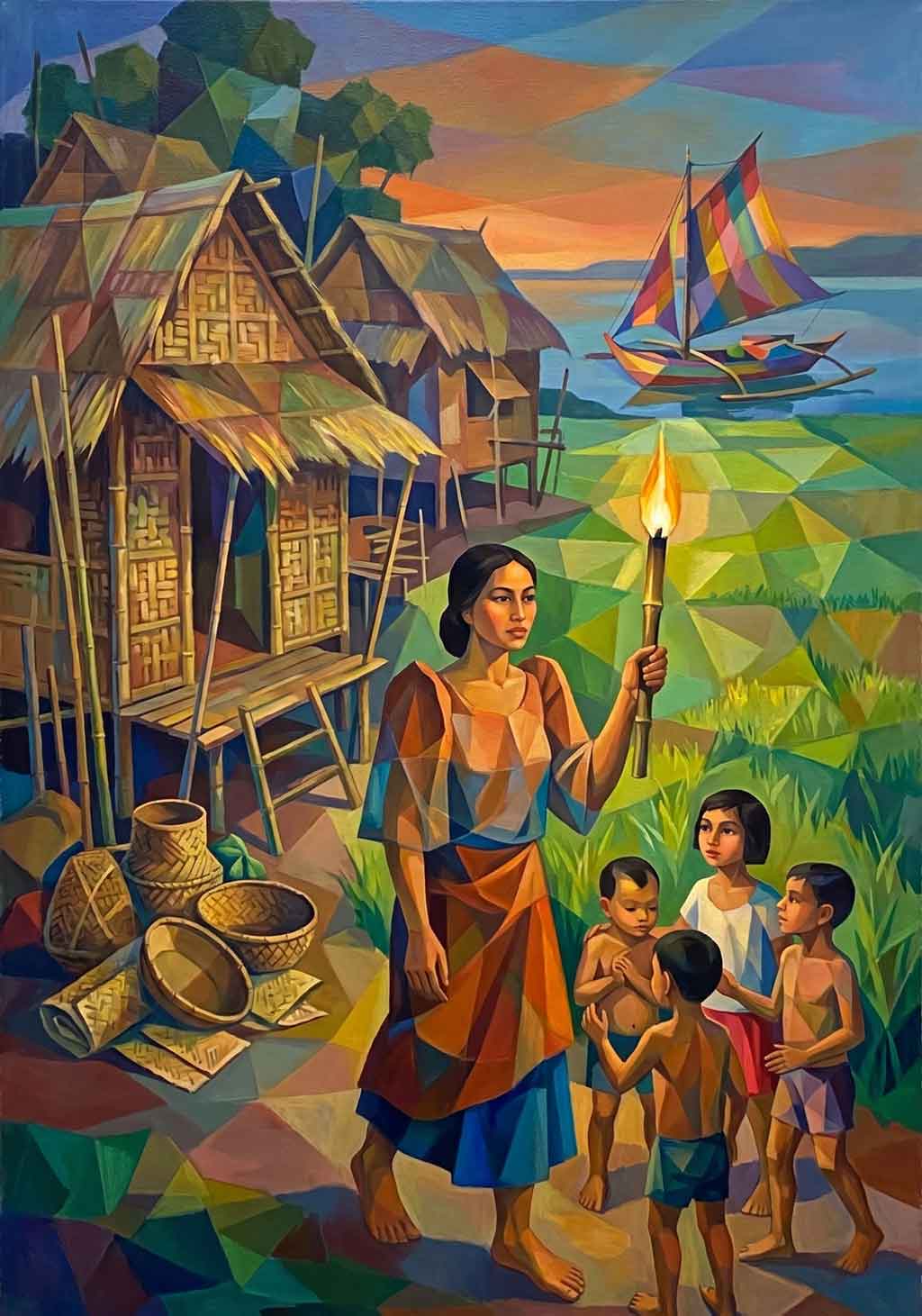
Vicente Manansala
This painting strongly exemplifies Vicente Manansala’s signature Transparent Cubism, where overlapping geometric planes refract and fragment light while keeping the underlying figures recognizable.
It captures classic Philippine genre themes, depicting rural life, native nipa huts, woven baskets, and traditional attire broken into luminous, multi-faceted shapes.
The color palette blends earthy tones with vibrant stained-glass-like hues, creating a sense of dynamic movement and atmosphere across the fragmented landscape.
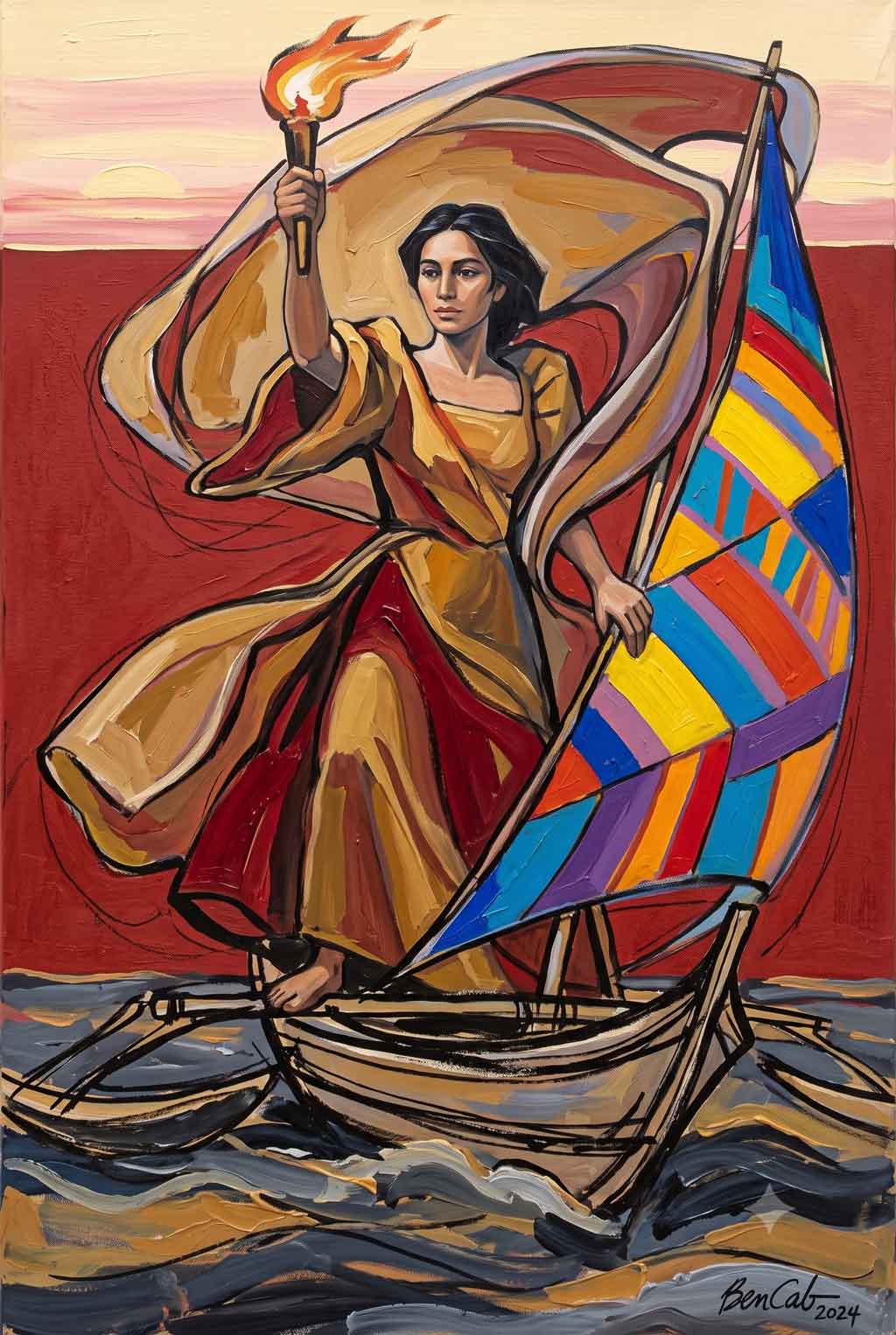
Benedicto Cabrera
This evokes Benedicto Cabrera’s work through its strong, expressive figure, dramatic movement, and bold, angular outlines. The flowing fabric and exaggerated folds give the woman a sculptural quality often associated with his portrayals of Filipina subjects. Its earthy palette, combined with vivid bursts of color, also creates a distinctly Filipino yet modernist atmosphere. The composition feels both symbolic and emotionally charged, blending cultural identity with contemporary expression.
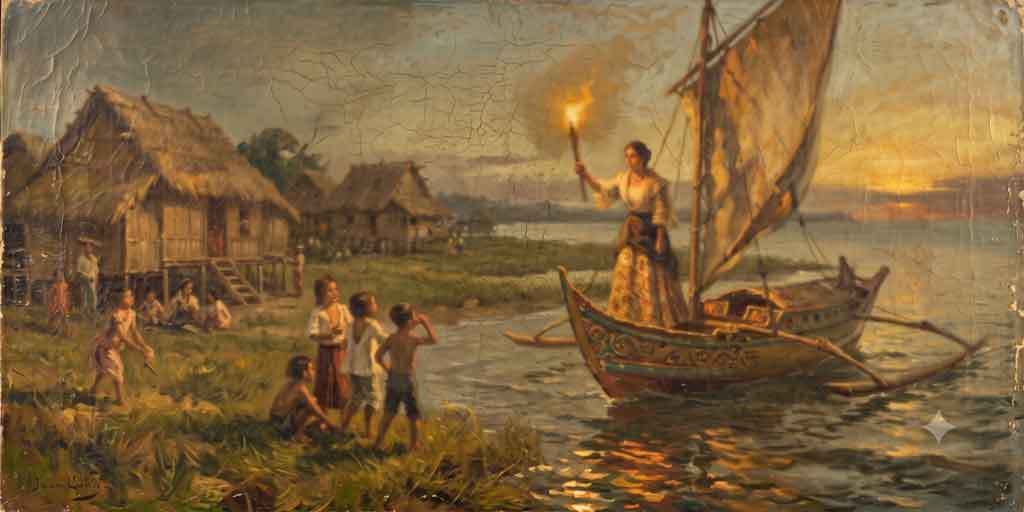
Juan Luna
This piece features dramatic chiaroscuro lighting, where the bright glow of the torch and setting sun casts deep shadows and warm highlights across the scene—a signature trait of 19th-century European academic painting.
It blends romanticized Philippine social imagery with allegorical narrative, depicting a woman in traditional baro’t saya on a native outrigger boat (paraw) arriving at a coastal village.
The composition relies on a classic earth-toned color palette and detailed realism in the figures and surrounding nipa huts, with a prominent “Juan Luna” signature visible in the lower-left corner.
Ready to talk about smarter investments?
Feel free to reach out or message me directly. I’m here to help

Contact
Mobile / SMS / VIBER / WHATSAPP: +63 928 503 5321
Email: consult@iloilocondominiums.com