“How do you feel na slowly Iloilo is becoming popular among Pinoys?”
I came across this thought-provoking question on Reddit — and as someone born and raised in Iloilo City, it struck a chord.
It didn’t take long before I saw comments like:
“Lowkey wanna gatekeep this city for real haha”
“Yes. Lagaw lang kamo diri, indi lang magtinir 🙏”
“As much as possible I want to gatekeep Iloilo.”
And honestly? I feel the same way.
There’s a strange mix of emotions when your hometown finally gets the recognition it deserves — joy and pride, but also a quiet anxiety.
Yes, I’m proud. Iloilo has always been beautiful — but today, it’s more vibrant, more polished, and more alive than ever. The blend of heritage and progress, culture and cleanliness, warmth and wisdom — it’s something other cities in the Philippines (even Southeast Asia) could learn from.
But let’s be real — Iloilo is far from perfect.
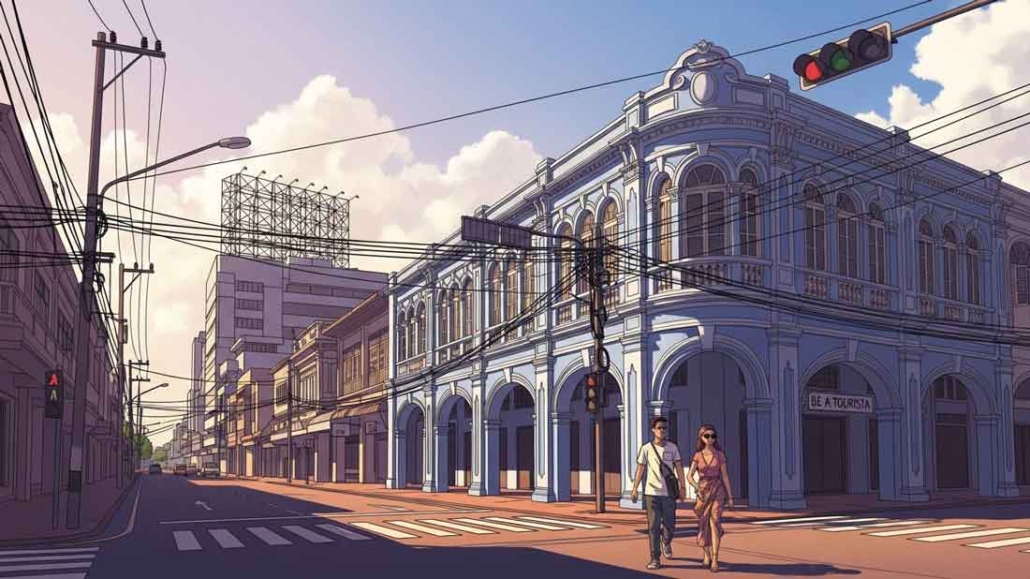
As someone who drives the city roads daily, I can say this: traffic is slowly becoming a real issue. We’re still nowhere near the chaos of Manila or Cebu, but you can feel it — the flow is getting slower, the congestion creeping in, the jams becoming more frequent.
Then there’s the drainage and flooding — a recurring frustration during the rainy season. And let’s not forget the power outages and erratic electricity distribution. Still left to be desired.
And yet — I see the effort.
There are closures for road and drainage improvements. MORE Power technicians on ladders is a ubiquitous scene in every barangay. It’s a city trying to keep up — grappling with the pressures of its rising status.
The Numbers
At the root of it all? Volume.
More people means more cars, more energy consumption, more trash, and more pressure on public services. So yes, I get why many Ilonggos joke about “gatekeeping” the city. It’s not selfishness — it’s self-preservation. A knee-jerk response to protect the identity, space, and peace we’ve quietly enjoyed for years.
Let’s not forget:
🟡 Metro Iloilo is the smallest metropolitan area in the Philippines — just 390 square kilometers. That already includes far-flung towns like San Miguel and Santa Barbara, which arguably sit outside the true urban core.
And yet — despite being the smallest — Metro Iloilo (excluding Guimaras) is already the third most densely populated metropolitan area in the country, next only to Metro Manila and Metro Cebu.
That alone should make us think. But here’s the real kicker:
🟠 Iloilo City is the densest urban core in the entire Visayas–Mindanao region — clocking in at ~5,842 people per square kilometer. For comparison, Cebu’s only at 3 thousand.
So yes, we’re growing. Fast.
I’ll be blunt.
We are cramping up.
And unless we manage this growth well, we risk becoming the very kind of city we’ve always prided ourselves on not being — overpopulated, overdeveloped, and overwhelmed.
The Solutions
I’m no urban planner. What I share here comes from observation and haum-haum — born from countless ‘Tito discussions’ over pilsen or brandy.
I’m not claiming to have discovered the solutions — in fact, the ideas I’m about to share are already quietly being implemented.
But maybe, I thought, it’s worth writing them down. So people stay hopeful. So we remember that the future is not doomed.
1. Development must radiate outward — toward surrounding municipalities.
Metro Iloilo’s growth can’t remain boxed in within Iloilo City. The pressure must spill over — but not just as low-cost housing options or sleepy bedroom towns. Surrounding municipalities must be shaped into self-sustaining urban hubs — with their own centers of employment, schools, hospitals, parks, and transport links.
Progress shouldn’t mean squeezing more people into the core.
It should mean expanding the core.
Places like Pavia, Oton, Santa Barbara, and Leganes need to become more than just cheaper alternatives — they need to be truly livable, desirable, and connected.
And honestly? I think this is already happening — especially in Pavia. My hope is that this same growth logic reaches the rest of Metro Iloilo’s towns too.

2. The Iloilo–Guimaras Bridge: A Game Changer
And of course, there’s the big one on the horizon: The Iloilo–Guimaras Bridge.
This isn’t just a bridge. It’s a lifeline. A corridor. A shift.
Once completed, it will open up Guimaras (and Leganes) like never before — not just for tourism, but for urban development. It has the potential to transform Guimaras into a highly urbanized province — while relieving some of the pressure on Iloilo City.
This is radiating development, quite literally — over water.
3. Walkability is Key
One of the fastest and smartest ways to make a dense city more livable is to make it walkable.
Think:
-
Shaded sidewalks
-
Safe crossings
-
Sheltered overpasses
-
Strategically located PUV stops
-
Clean, continuous pedestrian paths
Yes, we have the Esplanade. Yes, the bike lanes on Diversion exist (and these also serve as paths for pedestrians). But beyond that, walkability remains a struggle.
We don’t have enough overpasses — especially across Benigno Aquino Ave., where pedestrians keep getting hit and die. These are avoidable, tragic deaths. Dumb and preventable. We need to do better.
Why Walkability Matters:
-
Less traffic (fewer short car trips)
-
Less pollution (especially air and noise)
-
Healthier citizens (more daily steps LOL)
-
Less crowded jeeps and buses (those who can walk, will)
And hey — walking helps with weight loss.
Meaning people literally shrink — solving our space problem one step at a time.
(I know I’m pushing it here — but you get my point.)

4. Faster Turnover of Projects
Now let me rant a little.
Can we talk about the painfully slow completion of road and drainage projects?
Playing SimCity as a teen didn’t influence my expectations — but come on, some of these projects take forever. Road closures that last half a year. Sidewalks that remain half-done for months. What is going on?!
These delays hurt everyone — commuters, businesses, delivery drivers, emergency responders. And worst of all, they erode public trust.
If the target says 90 days, deliver in 90 days.
No more fence-and-forget style project rollouts.
You want people to believe in Iloilo’s progress?
Finish the damn projects. On time.
5. Lastly, Politics
All of these solutions boil down to two things:
political will and corruption.
The ideas themselves are no-brainers. Like I said — I didn’t come up with any of these. You’ve probably thought of them too.
But implementing them requires cooperation between LGUs, private companies, and engaged citizens who actually give a damn.
You know the drill: less politics, zero corruption — and suddenly, the solutions work like magic.
Let’s not just gatekeep Iloilo…
Let’s grow it smartly. Let’s protect what makes it special.
And most of all, let’s build a city that works for the people who love it most.
DO YOU HAVE QUESTIONS ABOUT OUR PROPERTIES?

Contact
Mobile / SMS / VIBER / WHATSAPP:
+63 928 503 5321
Email: consult@iloilocondominiums.com